
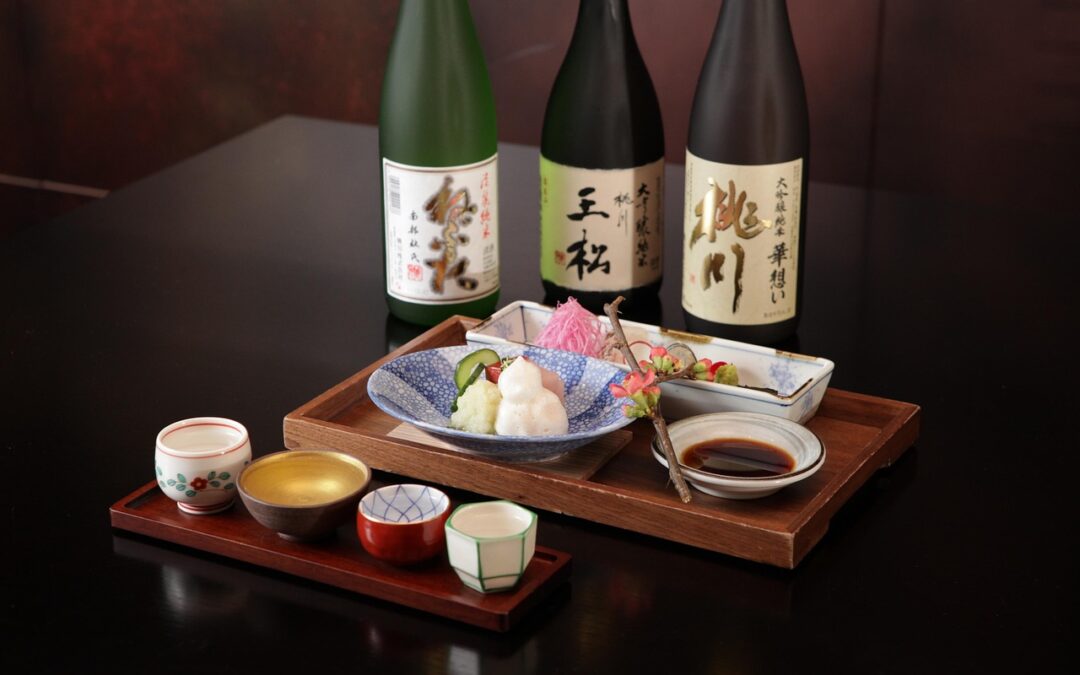
In last month’s column I covered the history, background, storage and service of sake. This month I cover pairing various types of sake with food.
When pairing sake with food, keep in mind that sake is less acidic than wine but much richer in umami due to its higher amino acid content. Sake pairs with foods typically matched with wine, especially lightly prepared seafood, vegetables, and most Asian dishes.
The Important Types of Sake
Ginjo (geen-joh). A premium sake. The texture is smooth with fruit, floral, and earthy characteristics. The aroma is light, and the flavor is mild, sometimes exhibiting notes of fruit or flowers. Serve lightly chilled. Pairs with poultry, meat, and lighter dishes like raw fish, or smoked salmon with cream cheese.
Daiginjo (die-geen-joh). A super-premium sake and sub-category of Ginjo. Typically characterized by a light body, complex profile, and refined fragrance. It is even lighter and more aromatic than Ginjo. Serve lightly chilled. Ideal with fish (especially raw), vegetables, lightly marinated shrimp, or egg custard.
Junmai (june-my). Premium sake with no brewer’s alcohol added. Earthy and full-bodied with pronounced rice flavor, umami notes, and a hint of acidity. Serve lightly chilled. Pairs with grilled, oily, white-fleshed fish, and richer sauces, including cream sauce.
Honjozo (hon-joh-zoh). Fermented for a longer period of time, giving a complex and delicate flavor. It is lighter than Junmai, with noticeable honeydew and mineral notes, and a crisp finish. Serve at room temperature. Pairs with a light seafood salad with moderate seasoning and subtle greens.
Nama. Unpasteurized sake; can spoil if not refrigerated. Pairs with sushi, sashimi, and bitter leafy vegetables.
Futsū (foo-tsue). Ordinary sake, similar to table wine, accounts for about 75 percent of Japan’s total sake production. Serve at room temperature or warmed. Pairs with tempura, green vegetables, and light pork dishes.
Tokubetsu (toh-koo-bet-suh). A hand-crafted sake using a special sake rice, with some brewer’s alcohol added. Serve lightly chilled. Pairs with sushi, sashimi, tempura and ramen.
Nigori (nih-gor-ee). Nigori is an unfiltered sake, often called “antique” or cloudy sake, produced using rough filters that leave rice lees in the bottle. It is comparable to Germany’s hefeweizen beers. Sweet and full-bodied, this dessert sake should be shaken to mix the settled rice lees. Its color and texture are similar to a milkshake or Piña Colada, with tropical fruit notes. Serve well chilled. Pairs with spicy dishes (Thai, Indian, Chinese), curry, chocolate, and desserts.
Chilled sake served in a wine glass, regardless of the type, pairs with sushi, sashimi, raw clams and oysters, caviar, spicy hot peppers, soy and fish sauce, and even salty and oily French fries.
 Bob Lipinski, author of 10 books; writes, consults, and conducts training seminars on Wine, Spirits, and Food and is available for speaking engagements.
Recent Comments