By Bob Lipinski
What is a Plan B?
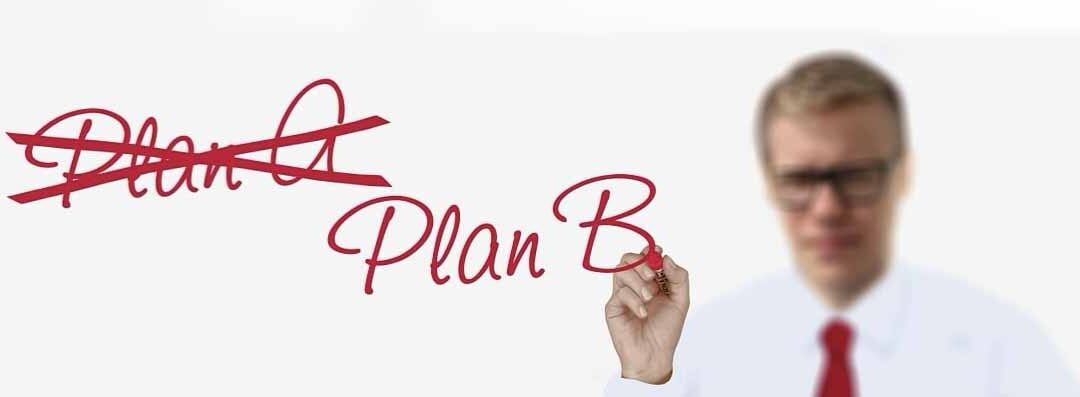
Whether you call it a “Plan B,” a backup plan, a contingency plan, or an alternative strategy; it all boils down to the same thing. Planning for the unexpected… for it happens in direct correlation with the lack of pre-planning.
It pays to plan. “It wasn’t raining when Noah built the ark.” (Howard Ruff, 1931-2016, author and financial advisor)
In sales, having several different approaches depending on what is best in each situation, rather than a single approach, eliminates sudden death of the proposal if declined. Even if you plan the sales call, anticipate objections, have sales data and history, product knowledge, sell sheets, a “smile,” key selling points, and which closing technique you will use; something could still go astray. And if it does, what are you going to do? If it was a game of football and it was fourth down, you have two choices… go for it or punt! Selling is quite different. Unless you develop a “Plan B,” you will have neither choice.
Planning for the Unexpected in Sales
In sales, planning for the unforeseen isn’t about predicting the future; it’s about building a system resilient enough to handle whatever curveball you might encounter. Develop a contingency plan where you have several different options depending on what is best in a given situation. If something is going to go wrong, you probably cannot exercise any control over it. So just let it go wrong. But still have a backup plan.
Remember… having a “Plan B” isn’t a sign of failure; it’s a sign of strategic planning that have in your back pocket in case of emergencies.
This also relates to emergencies or the unexpected. If the presentation with your client or wholesaler is to run smoothly, you must be prepared for unexpected. The bigger the deal or event, the more detailed your backup plan should be, and you might consider Plans “C” and “D.”
Tips for Contingency Planning
Consider these planning tips (If “Plan A” doesn’t work, then you go to “Plan B”)
- In your pre-plan, come up with a “Plan B” scenario…
- Even if you don’t need it
- One you can quickly pivot to
- That can be adaptable if the presentation doesn’t go your way
- Develop project contingency strategies to minimize waste, error, or risk
- Think outside the box, anticipate other possible scenarios and outcomes
Remember, if something is going to go wrong, it will!
“The most successful people are those who are good at Plan B.” (James A. Yorke, Professor of Mathematics and Physics)
Bob Lipinski, author of 10 books, has served in executive sales, training, and education roles within the Wine & Spirits Industry for over 40 years. He was also a College Professor of Management & Marketing at N.Y. Institute of Technology and Managing Director of Sales & Marketing for Ventures Education Systems U.S. Contact him at www.boblipinski.com OR bkjm@hotmail.com.
 Bob Lipinski, author of 10 books; writes, consults, and conducts training seminars on Wine, Spirits, and Food and is available for speaking engagements.
Recent Comments