
By Bob Lipinski
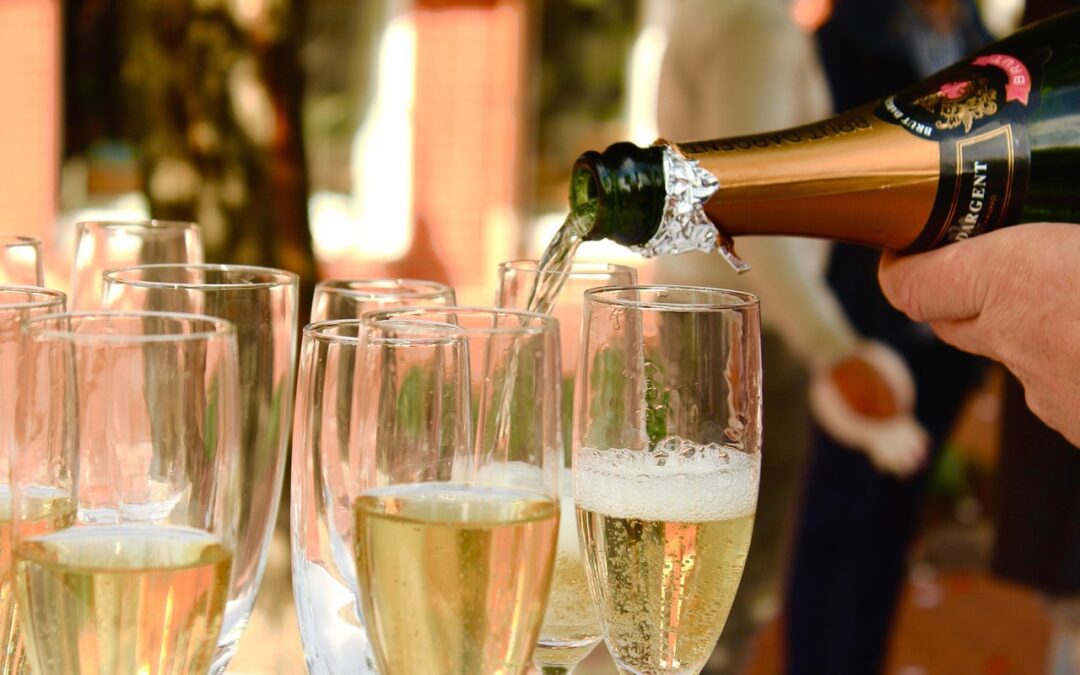
Sparkling wines are produced in all wine-producing countries, a figure that now exceeds 120 nations worldwide. These wines are frequently served on special occasions and holidays, though their enjoyment need not be limited to such events. Due to their carbonation and wired-down cork, it is essential to exercise particular caution when storing, chilling, opening, and serving these beverages.
Tips, Ideas & Suggestions
Here are some helpful tips, tricks, ideas, and suggestions—known as the “Trucs of the Trade”—to make your celebration extra special. (Note: The word champagne will be used generically in this article.)
For large parties, an easy, on-the-spot ice chest to chill champagne can be constructed with an empty cardboard wine box. Remove the inserts, fold the flaps in, line the box with a heavy-duty plastic bag, and fill with ice and water.
By wrapping a bottle of champagne in a wet paper towel and placing it in the freezer (30 minutes), you’ll be able to speed up the cooling process. This is caused by rapid evaporation of the water in the towel, which pulls heat away from the bottle much faster than just sitting in the freezer by itself.
For serving champagne, chill the bottle in the refrigerator for three to four hours. Alternatively, place it in an ice bucket filled with ice and water to create an “ice bath”; about fifteen to twenty minutes in this bath is sufficient.
Do not shake champagne before opening. If the bottle was recently moved, let it settle for a day, as carbonation makes controlling the cork challenging.
Removing the Champagne Cork
If a champagne cork is hard to remove, run the bottle’s neck under warm water for 2 minutes to loosen the paraffin coating, then use a towel for better grip.
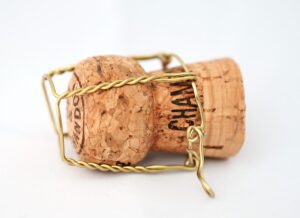
Never use a corkscrew on a bottle of champagne, as the pressure inside can cause the cork and corkscrew to shoot out dangerously, potentially injuring your eye. However, if the head of a champagne cork breaks off during opening, wrap a towel around the bottle’s neck, carefully insert a corkscrew into the remaining cork, then cover the corkscrew with the towel. Open the bottle as you would a “still wine,” keeping safety in mind.
Remove the foil and wire hood, hold the bottle at a 45-degree angle, and twist the bottle downward while holding the cork to release it. Let the cork slowly slide out until you hear a soft “pop.” Keep the bottle angled for a few seconds so the pressure inside balances out. Once done, place the bottle upright—now it’s ready to serve.
“Pour the Champagne and let its mousse rise, like thousands of sparkling smiling eyes.” (Jared M. Brown, author of Champagne Cocktails)
Bob Lipinski is the author of 10 books, including “101: Everything You Need To Know About Whiskey” and “Italian Wine & Cheese Made Simple” (available on Amazon.com). He consults and conducts training seminars on Wine, Spirits, and Food and is available for speaking engagements. He can be reached at www.boblipinski.com OR bkjm@hotmail.com
 Bob Lipinski, author of 10 books; writes, consults, and conducts training seminars on Wine, Spirits, and Food and is available for speaking engagements.
Recent Comments