
By Bob Lipinski
As alternatives to wine-by-the-glass, half- and quarter-bottles have clear advantages.
Once while I was Director of Training for Southern Wine & Spirits, I called on a restaurant (now closed) in East Hampton, Long Island, N.Y. to present an extensive list of wines we were proposing for by-the-glass pours. In the middle of my presentation, the restaurateur informed me that he doesn’t offer wine by-the-glass! I was momentarily speechless, then dumfounded by his remark.
So, I said, “I’m perplexed by your comments. I know you’re open for lunch and dinner, but you don’t offer customers the opportunity of having a glass of wine?”
He replied, “Everyone who sits at my bar or dinner table has at least two glasses of wine, so I offer only half-bottles, or in the case of sparkling wines, sometimes quarter bottles. I have a list of 40 half-bottles and will probably add more this summer.”
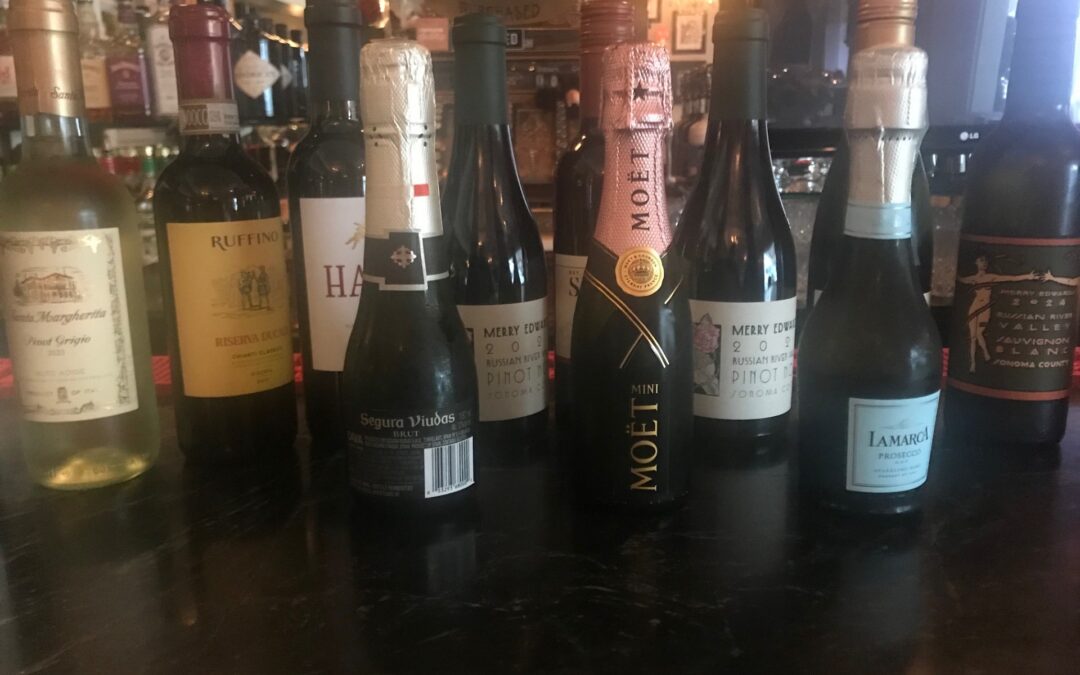
What he said made sense for his restaurant and clientele at the time. Let’s look some of the benefits of selling 375ml., half-bottles (12.7-ounces, sometimes called fillettes or tenths) or 187ml., quarter bottles (6.3-ounces, sometimes called nips or splits) of wine.
By offering half-bottles, a party of two can enjoy a white or sparkling wine with the appetizer and a red with the main course while still consuming only as much wine as if they had ordered one 750ml. bottle. In addition, it satisfies those who are only white or red wine lovers. For others, a half-bottle of white or sparkling wine with appetizers, then a full bottle with the entrée would be possible.
By the way… I sold the restaurateur about a dozen half-bottles of wine!
On-Premise Benefits
- Eliminates over or under-pouring glasses of wine
- Portion control is assured with precisely 6.3 or 12.7-ounces… every time
- Beverage costs easier to track and control
- Opportunity of offering various priced wines for increased profits
- No need for a nitrogen system or pumping bottles each night
- Eliminates the concern of what to do with opened bottles that become oxidized (or flat in the case of sparkling wines)
- Offering many red, white, and rosé varietal wines, instead of the basic four (Cabernet Sauvignon, Merlot, Chardonnay, and Pinot Grigio)
- A “no-name” glass of wine is replaced by one with brand recognition
- Opportunity for customers to “trade up” from typical wine-by-the-glass offerings
- Sets you apart from the competition
- Half-bottles chill faster than 750ml bottles
- Half-bottles take up less space in the cold box or ice tub
- You can offer an array of sparkling wine and champagne in 187ml or 375ml
- Fortified wines- Port, Sherry, and Madeira in 375ml bottles can be merchandised
- Ideal for solo diners, business travelers, and perhaps senior citizens
- Great in hotel mini-bars
- Half-bottles work well in displays for retail and restaurants
Off-Premise Benefits
- Provides opportunity for customers to purchase several or more bottles for a home wine tasting
- They make unique wedding favors
- Perfect for hostess and house-guest gifts
- Ideal for summer picnics or outdoor parties
Bob Lipinski, author of 10 books, has served in executive sales, training, and education roles within the Wine & Spirits Industry for over 40 years. He was also a College Professor of Management & Marketing at N.Y. Institute of Technology and Managing Director of Sales & Marketing for Ventures Education Systems U.S. Contact him at www.boblipinski.com OR bkjm@hotmail.com.
 Bob Lipinski, author of 10 books; writes, consults, and conducts training seminars on Wine, Spirits, and Food and is available for speaking engagements.
Recent Comments