By Bob Lipinski
The year was 1810 and the world was about to celebrate the marriage of Crown Prince Ludwig to Princess Therese von Sachsen-Hildburghausen of Bavaria on Oct. 12.
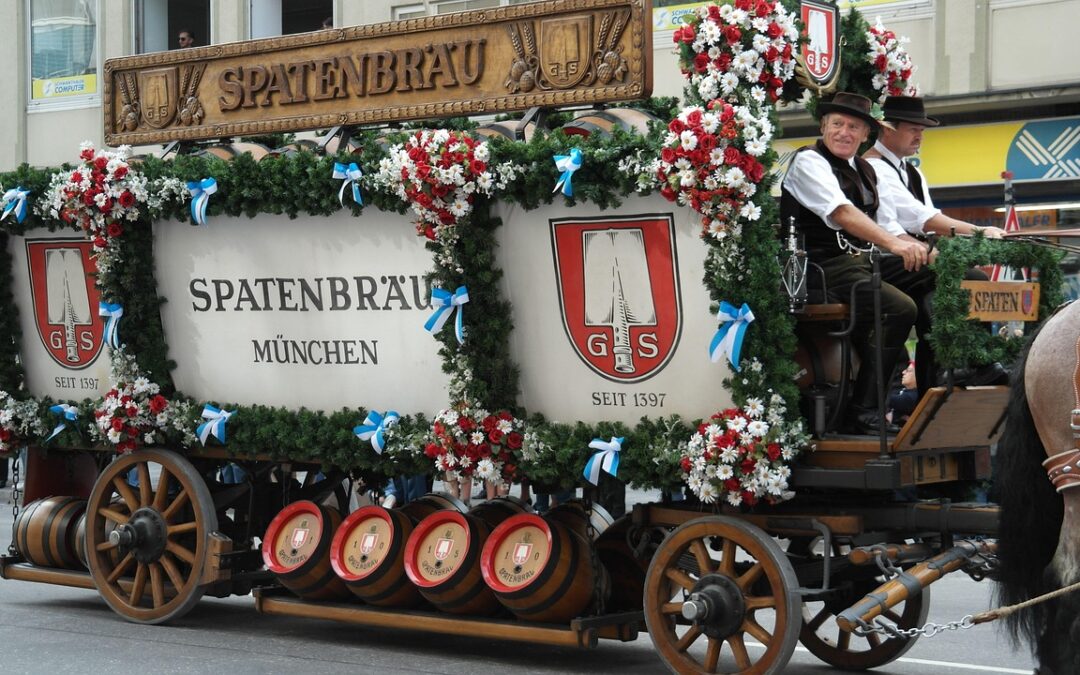
To celebrate the occasion, the crown prince’s father, King Max Joseph of Bavaria, hosted massive public festivities. The party was so successful that the meadow where it was held was renamed Therese’s Meadow. The annual tradition or party (Theresienwiese), which started out as a wedding ceremony, continues, except it is now known as Oktoberfest.
Oktoberfest is an annual festival in Munich, Germany that begins in late September and continues into early October. The largest Oktoberfest tent in history was the Pschorr-Festzelt Bräurosl in 1913, with a capacity of 12,000 people. As of 2025, the Hofbräu-Festzelt is the largest current tent, accommodating about 10,000 guests.
Historically, the beer served at the Oktoberfest from 1872 until 1990 was known as Märzen, an amber, malt-heavy, filling lager. Märzen is brewed in March, as its name indicates, then stored in cold caves through the summer and typically consumed before October.
Beginning in 1990, the official beer served at the Munich festival was changed to Festbier. This lager-style beer was designed by Munich’s Paulaner Brewery in the 1970s to be highly drinkable, crisp, and hoppy, allowing festival-goers to consume larger quantities.
In 2025, Oktoberfest attracted 6.5 million visitors. Over the course of the festival, attendees drank an estimated 7 million liters of beer—about 1.8 million gallons. The price of a one-liter beer ranged from $16.88 to $18.39.
Consumption data shows that visitors at the Oktoberfest consumed the following:
- Roast chicken: 550,000 whole chickens
- Fish: 98,000 pounds
- Pork sausages: 500,000
- Pretzels: 50,000 to 100,000 per day
At Oktoberfest, the most popular sausages include bratwurst, typically made from grilled pork or veal, and schweinswurst, which is made from pork. Another traditional favorite is weisswurst; a pale sausage made from veal and pork. In Bavarian tradition, weisswurst is not eaten after noon.
Oktoberfest beer brewed in Germany for the United States is still typically made in the traditional Märzen style. Most American breweries follow that model, producing beers with a deeper copper-red color, pronounced caramel and toasted malt sweetness, and slightly more hop bitterness than German versions.
Oktoberfest beer sold in the United States pairs well with spicy foods, hearty beef and lamb stews, sweet or spicy sausages, and large salted pretzels. For cheese, good choices include Cheddar, Comté, Emmentaler, Gouda, Gruyère, Idiazábal, and Monterey Jack.
Bob Lipinski is the author of 10 books, including “101: Everything You Need To Know About Whiskey” and “Italian Wine & Cheese Made Simple” (available on Amazon.com). He consults and conducts training seminars on Wine, Spirits, and Food and is available for speaking engagements. He can be reached at www.boblipinski.com OR bkjm@hotmail.com.
 Bob Lipinski, author of 10 books; writes, consults, and conducts training seminars on Wine, Spirits, and Food and is available for speaking engagements.
Recent Comments