
By Bob Lipinski
Marinating, basting, and deglazing are three essential techniques that build flavor, moisture, and texture at different stages of cooking. Together, they create a natural sequence: preparing food before it cooks, keeping it juicy as it cooks, and turning the remaining browned bits into a rich sauce.
Marinating (Before Cooking)
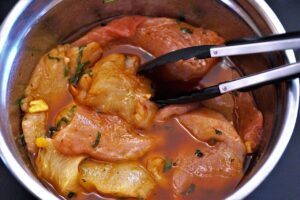
Marinating means soaking food in a seasoned liquid before cooking. It enhances flavor and can work alongside seasoning or aging for foods such as game, beef, poultry, and seafood. Depending on the ingredients, a marinade may also help tenderize the surface of tougher cuts of meat.
A marinade should include acid ingredients like lemon juice, vinegar, wine (white or red), yogurt, buttermilk, or even salsa. Other ingredients that can be used when marinating are spices, herbs, and different vegetables (onions, garlic, shallots) or fruits (kiwi, mango, papaya, pineapple).
To release flavor and concentrate its impact, a wine marinade is commonly simmered (and usually reduced), then chilled before being added to the raw food.
Food science shows marinades rarely penetrate the meat more than 1/8 of an inch, even after hours of soaking. They primarily add surface flavor.
However, there is a misconception that wine (or the acidity in marinades) tenderizes meat. Wine does affect the muscle proteins that make meat more tender, but it moves very slowly. The outside of the meat turns mushy before the inside gets tender enough. Wine will “cook” fish (as in ceviche), which is much less dense than meat.
Basting (During Cooking)
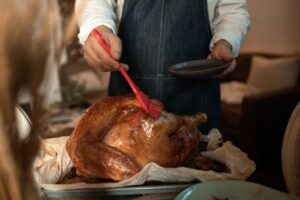
Basting is the act of moistening the surface of food while it cooks. Whether using a spoon, bulb baster, or brush, this technique adds flavor and color and prevents the food from drying out.
If there is a wine marinade, save it for basting while cooking and for accompanying sauces or gravies. But be certain that it is thoroughly heated and cooked before serving.
Basting can add or change a food’s color, which is often appealing and desirable. For instance, basting meats, game, or poultry with sweet red vermouth gives them a rich, deep hue because the wine contains natural caramel, which browns beautifully during cooking.
Different alcoholic beverages can be used for basting (also deglazing), depending on what you are cooking and the flavor profile you want to achieve. Some beverages are whiskey, dark rum, gin, brandy (also fruit brandy), most liqueurs, beer (especially dark), wine (red, white, rosé, sparkling), fortified wines (Madeira, Marsala, port, sherry, vermouth) and sweet dessert wines. Nonalcoholic liquids include stocks, water, fruit juices, vinegars, citrus juices, and verjuice (the tart, unfermented juice of unripe grapes).
Deglazing (After Cooking)
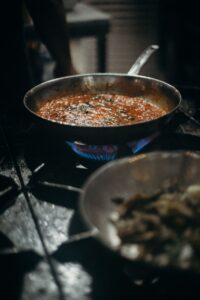
Deglazing is a simple, high-impact technique used to release and remove the caramelized, roasted bits of food stuck to the bottom of a pan with a wooden spoon, for later use in a sauce or gravy.
When you sear or roast meat and vegetables at high heat, the amino acids and sugars in the food react to create hundreds of complex, savory, nutty and caramel-like flavor and aroma compounds. This browning process is the Maillard reaction.
The concentrated, sticky caramelized leftover bits that stick to the bottom of the pan are called fond (fond is French for “foundation” or “base”), it essentially acts as the building block for deep, rich flavors.
When you add a splash of cold or room-temperature liquid into a hot pan, it instantly creates steam. This temperature shock combined with the liquid’s solvent properties dissolves the fond, easily lifting it off the surface of the pan.
Note: See Basting (During Cooking) above for a list of liquids that can be used for deglazing.
“You can teach yourself the techniques of any cooking from a book—there’s really not all that much to it. If you’re dogged and scientifically minded or academically obsessive, you can learn the techniques of a cuisine. But you can never learn the flavors without eating, without tasting.” (Barbara Tropp, 1948-2001, American chef and cookery writer)
Bob Lipinski is the author of 10 books, including 101: Everything You Need To Know About Whiskey and Italian Wine & Cheese Made Simple, available on Amazon. He consults and conducts training seminars on Wine, Spirits, and Food and is available for speaking engagements. Contact him at www.boblipinski.com OR bkjm@hotmail.com
 Bob Lipinski, author of 10 books; writes, consults, and conducts training seminars on Wine, Spirits, and Food and is available for speaking engagements.
Recent Comments